For parents and teachers
Small stories, big ideas
Children begin to understand money long before they handle it. These stories give them the words and habits early, through play and kindness.
A story first
Children follow Plodu, his little sister Tiddu, Amma, Papa and their neighbours. The money idea sits inside the story, never on top of it.
Your turn! on every page
Point, count, clap, say the chant, make a squishy face. Children join in instead of just listening.
A badge and a talk-together page
Each book ends with a badge to colour, a money word hunt, and simple “Talk about it” and “Try at home” ideas.
A child’s real work is to play, learn and be kind. These stories help children practise money ideas through play and small tasks with grown-ups.
How to use the books
At home, in small groups, in the classroom
At home
Read one book at bedtime or on a slow weekend morning – about 10 minutes. Do every Your turn!, say the chant, then try the small home activity from the last page that week.
In small groups
Playgroups, daycare, libraries and clinic waiting areas. One grown-up reads, the children answer the Your turn! questions together and act out the swap, the shop or the sharing jar with pretend coins.

In the classroom
One book a week for 10 weeks. Use the Talk about it questions at circle time, colour the free badge printables, and finish with a class “Ten-Minute Shop”. School prices →
Isn’t 3 too young for money?
Not at all. Little children already see money every day – at the shop, at the vegetable cart, on a grown-up’s phone. Research from the University of Cambridge suggests their basic money habits are usually in place by about age 7. They won’t do sums yet. What they pick up are the first ideas: things cost something, we can wait for what we want, and we can share. Each book is a funny story first, and the money idea comes along quietly – your child simply enjoys the story.
How to read together
Five small tips
Read slowly
Plod… plod… plod. Pause at each page so your child can look and point.
Do the “Your turn!”
Every page has something to do. Do it together, even twice.
Say the chant
Each book has a chant. Let your child shout it louder each time.
Find the peeking child
The Kathaboo child hides on every page. Searching keeps little eyes on the pictures.
Talk, then try
Ask one question after reading, and try the small activity at home that week.
Book by book
One idea, one question, one activity
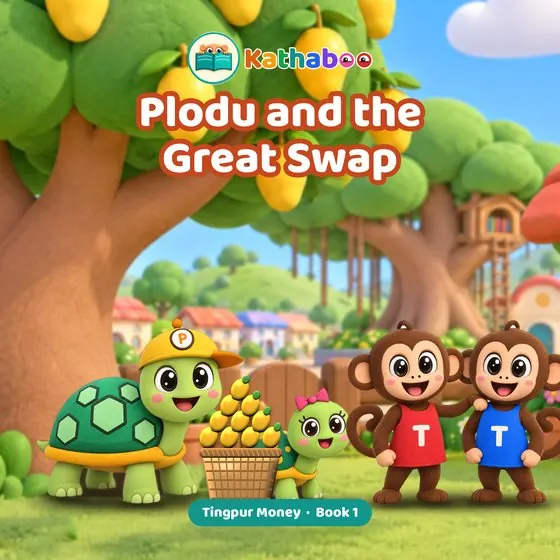
Book 1 · Plodu and the Great Swap
What money is. Ask: “Why did nobody want Plodu’s mangoes?”
Try at home: Play “swap shop” with three toys, then play again with three pretend coins. Which was easier?
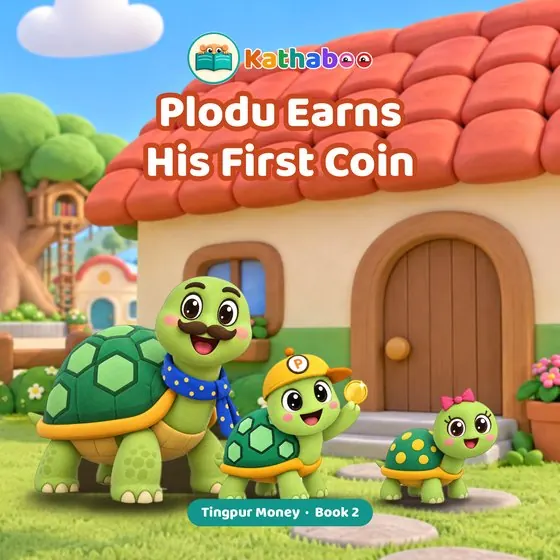
Book 2 · Plodu Earns His First Coin
Earning. Ask: “How does Papa earn money?”
Try at home: Make two lists: small jobs someone might pay for, and kind things we do for free for our family.
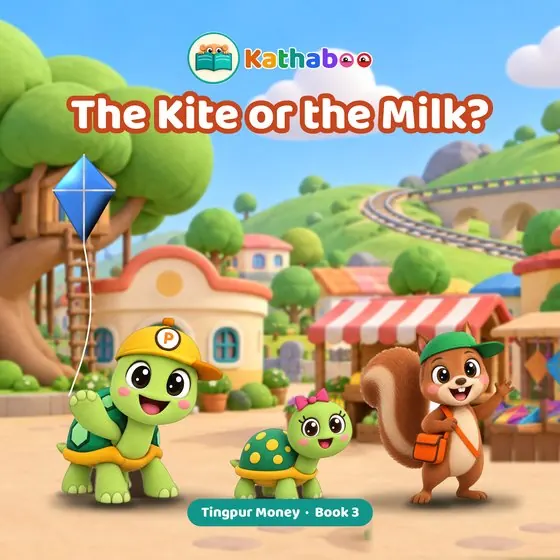
Book 3 · The Kite or the Milk?
Needs and wants. Ask: “What is the difference between a need and a want?”
Try at home: Before your next shopping trip, sort the list together into NEED and WANT.
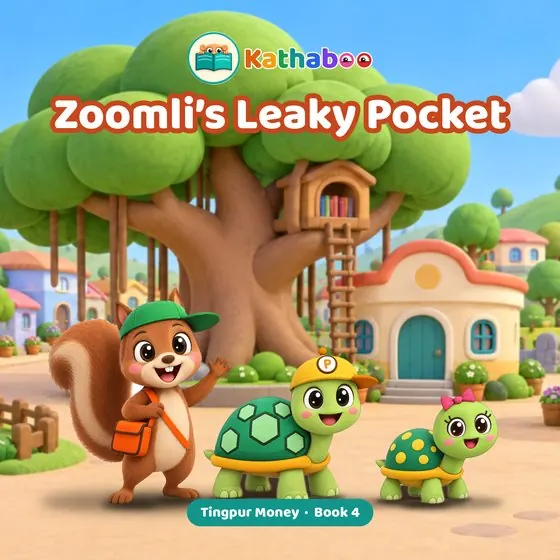
Book 4 · Zoomli’s Leaky Pocket
Keeping money safe. Ask: “Why did Zoomli lose her coins?”
Try at home: Find a safe place for your child’s coins together, and count them once a week.
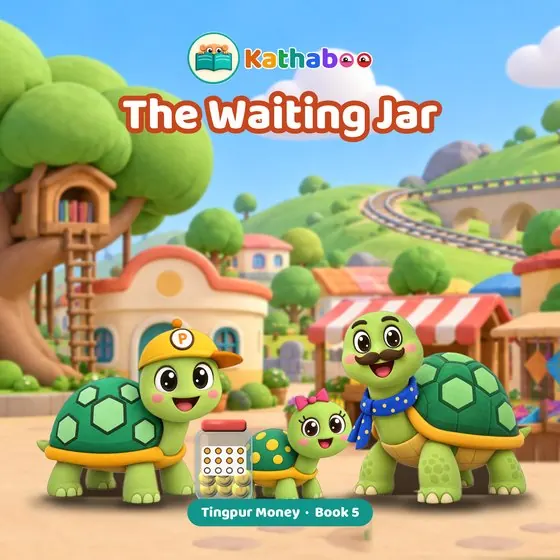
Book 5 · The Waiting Jar
Saving up. Ask: “What was Plodu waiting for? What was Tiddu waiting for?”
Try at home: Make a Waiting Jar with your child. Draw one circle for every coin needed and colour one in each time a coin goes in.
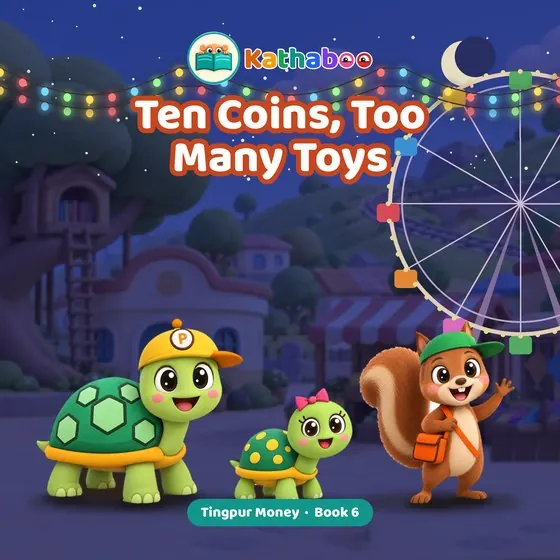
Book 6 · Ten Coins, Too Many Toys
Choices and budgets. Ask: “Why couldn’t Plodu do everything at the mela?”
Try at home: Give your child five pretend coins and a list of three treats with prices. Let them make a budget.
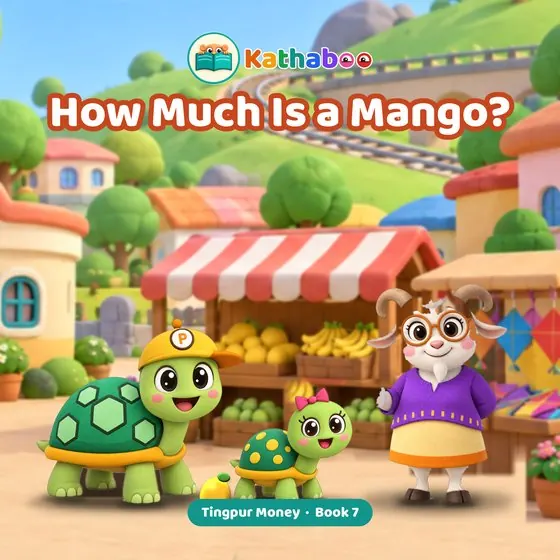
Book 7 · How Much Is a Mango?
Price. Ask: “Why did mangoes cost five coins at first and two coins later?”
Try at home: At the market, notice one fruit’s price this week and next month. Talk about why it changed.
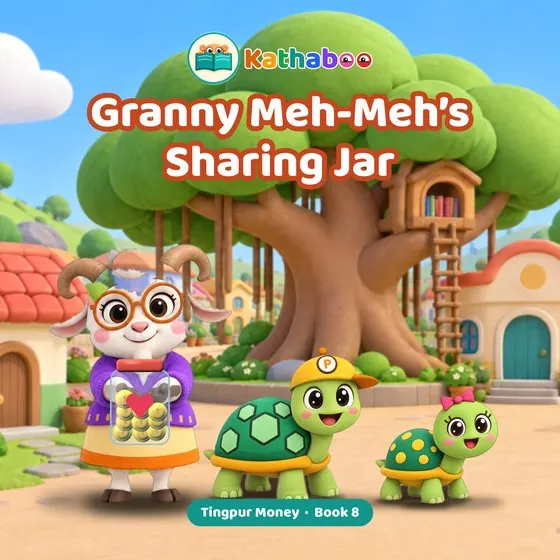
Book 8 · Granny Meh-Meh’s Sharing Jar
Sharing. Ask: “What was Granny’s Sharing Jar for?”
Try at home: Start a family Sharing Jar. Decide together who it will help.
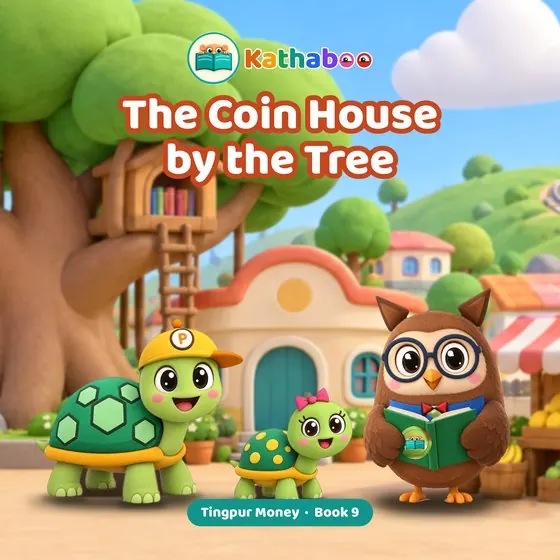
Book 9 · The Coin House by the Tree
What a bank does. Ask: “Where did Zoomli, the twins and Tiddu keep their coins? Were those safe places?”
Try at home: Visit a bank with your child, or look at a passbook together. Explain that the bank writes down every rupee.
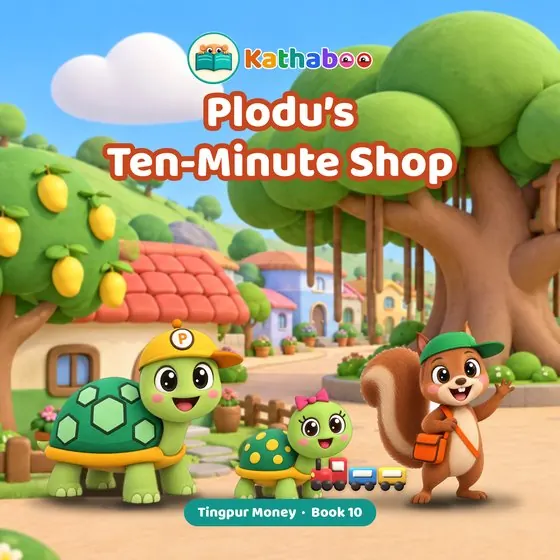
Book 10 · Plodu’s Ten-Minute Shop
Putting it all together. Ask: “Why didn’t Plodu’s delivery shop work at first?”
Try at home: Set up a pretend shop at home. Let your child “buy” stock, sell to the family, and count what is left over.
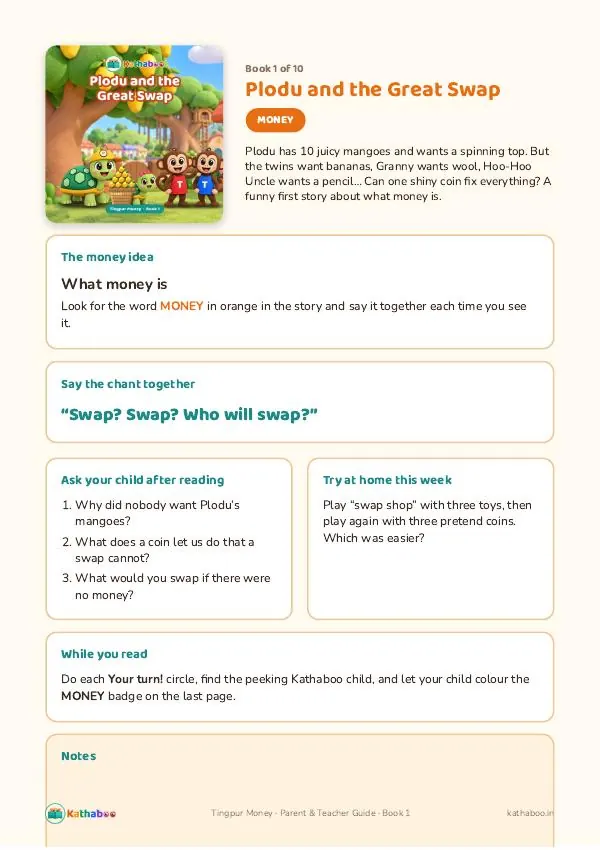
Free download
Parent & Teacher Guide
One page for each of the 10 books: the money idea, the chant to say together, three questions to ask, and one small thing to try at home this week. Print it, keep it next to the books, or use it at circle time.
Parents ask us
Questions from parents
My child is only 3. How do I start?
Start with Book 1, Plodu and the Great Swap. Read it aloud slowly and do each Your turn! together. Your child does not need to know numbers or coins – they simply enjoy the story, and the idea comes along with it.
Will my child need me to read with them?
At 3–5, yes – these books are made to be read together, and the Your turn! questions work best with a grown-up. Many 6–7 year olds can read them on their own, but they still love doing the chant with you.
My child can’t count yet. Is that OK?
Yes. The numbers stay small, mostly up to 10, and counting along with Plodu is part of the fun.
We mostly pay by phone. Do coins still make sense?
Yes. Coins are something a child can see, hold and count, so they are the easiest way to understand what money is. One of our next books, Where Did Amma’s Coins Go?, is about paying with a QR code.
In what order should we read them?
Books 1 to 10 build on each other, ending with Plodu’s own little shop. But every book is a full story on its own, so any order works.
How long does one book take?
About 10 minutes. Each book has 12 to 20 pages, ending with a badge to colour and a talk-together page.
Is there a guide for grown-ups?
Yes – the free Parent & Teacher Guide: one page per book with the money idea, the chant, questions to ask and one thing to try at home.
Can I see the pages before buying?
Yes. Look inside Book 1, or turn more pages on Read & Play.